Registering a Company Under the Thailand Board of Investment

Registering a company under the Thailand Board of Investment (BOI) opens up a whole host of fiscal and non-fiscal incentives for foreign investors. However, achieving BOI status takes time and care.

Documents like a memorandum of association, details about shareholders, and copies of passports or IDs are required. Other files include a business plan and forecasts for investments and profits.

Requirements

If you are planning to register a company under the Thailand Board of Investment, it is advisable to seek guidance from legal and business professionals to ensure that your application meets all requirements. These requirements include the preparation of a detailed business plan. This document will be scrutinized by the reviewing BOI official, so it must be exhaustive and accurate. It should cover every aspect of the company’s business in Thailand, including management, ownership, processes, financing, human resources, investment, technology, and profitability.

It should also include a detailed inventory of all equipment and materials used by the company, as well as a list of all employees and their job titles. The company should also prepare financial statements and projections for the first three years of operation. Lastly, the company must submit a list of directors and their nationalities. At least one of these must reside in Thailand to sign documents on behalf of the company.

Several incentives are available for companies registered under the Thailand Board of Investment. These incentives are based on the type of industry and region. For example, a five-year corporate income tax exemption is provided for high-technology activities that are vital to the development of Thailand. Incentives are also available for activities that contribute to the production of goods for export. Other benefits include a removal of the foreign worker quota and a reduction in value-added tax (VAT) registration fees for certain products.

Procedures

Before applying for a BOI certificate, investors must first prepare a business plan. This document should address every aspect of the business, including management, ownership, processes, finances, investments, and technology. The plan will be reviewed by a BOI official, and any shortcomings could result in the rejection of an application. Working with a professional to assist with this process is highly recommended.

After preparing a comprehensive business plan, investors must deposit a minimum of 1 million baht as capital. They must also open a bank account and choose an original name for their company. In addition, they must obtain a tax ID number and register for VAT if their revenue is above 1.2 million baht. They must also submit copies of the directors’ passports or IDs and the company’s registered address.

Once approved, the BOI will issue a business registration certificate that must be displayed in a prominent location. Additionally, companies must report any changes to the BOI within 30 days of those changes. Furthermore, BOI-promoted companies are required to make a tax prepayment of 50% of their estimated tax liability within two months after the end of their accounting period. In addition, these companies must display a business name board in both Thai and English on the front of their main office and any branch offices.

Taxes

The BOI is an agency under the Prime Minister’s Office that safeguards foreign investment in the country. It offers both fiscal and non-fiscal incentives to companies registered with it. For example, it waives corporate taxes for up to thirteen years. Incentives are based on a variety of criteria, including the company’s potential impact on Thailand’s economy and industry. However, a company must adhere to strict guidelines and ensure that its work doesn’t harm the environment.

The first step is to create a comprehensive business plan that meets the BOI’s requirements. This is essential, as an inadequate plan will likely get rejected. It should include details of all aspects of the company’s operations in Thailand, including management, ownership, production processes, financing, human resources, and technology.

Once the application is complete, it must be submitted to a BOI officer. The approval process can take between 40 working days for investments equal to or less than 200 million baht, and 90 working days for those exceeding 2,000 million baht. In some cases, the project must also be approved by the Ministry of Commerce, the National Economic Development Board (NEDB), or the Industrial Promotion Centers. It is best to consult with experts on the matter before submitting an application. They can help you navigate the process and avoid unnecessary delays.

Incentives

Incentives are available for registering businesses under the BOI, but they are dependent on the project’s location. Special economic zones (SEZs) are established in ten provinces bordering neighboring countries, where the government offers tax and non-tax incentives for logistical activities such as warehouses near the borders; distribution; services; manufacturers that use raw materials from nearby markets; and knowledge-based industries, like R&D centers.

Companies may also receive incentives for establishing regional operating headquarters and research and development centers in Thailand. To qualify, the company must meet certain minimum requirements for capital investment and debt-to-equity ratios. The company must also establish a technical and personnel management center in Thailand, or provide support, service, or training for its associated enterprises. The company must also have paid-up capital of at least THB 10 million on the last day of each accounting period, and at least ten knowledgeable and skilled employees working full time for its international business centre (IBC).

Generally, foreigners may not own majority stakes in most businesses under the FBA, but U.S. nationals are exempt from these restrictions under the U.S.-Thailand Treaty of Amity and Economic Relations. In addition, the Thai government has taken steps to become a leader on Responsible Business Conduct (RBC).

State-owned enterprise (SOE) investors can enjoy the same tax benefits as private enterprises. However, SOE senior managers report to a cabinet minister or SEPO and corporate board seats are typically given to politically affiliated individuals.

Tourist Visa in Thailand

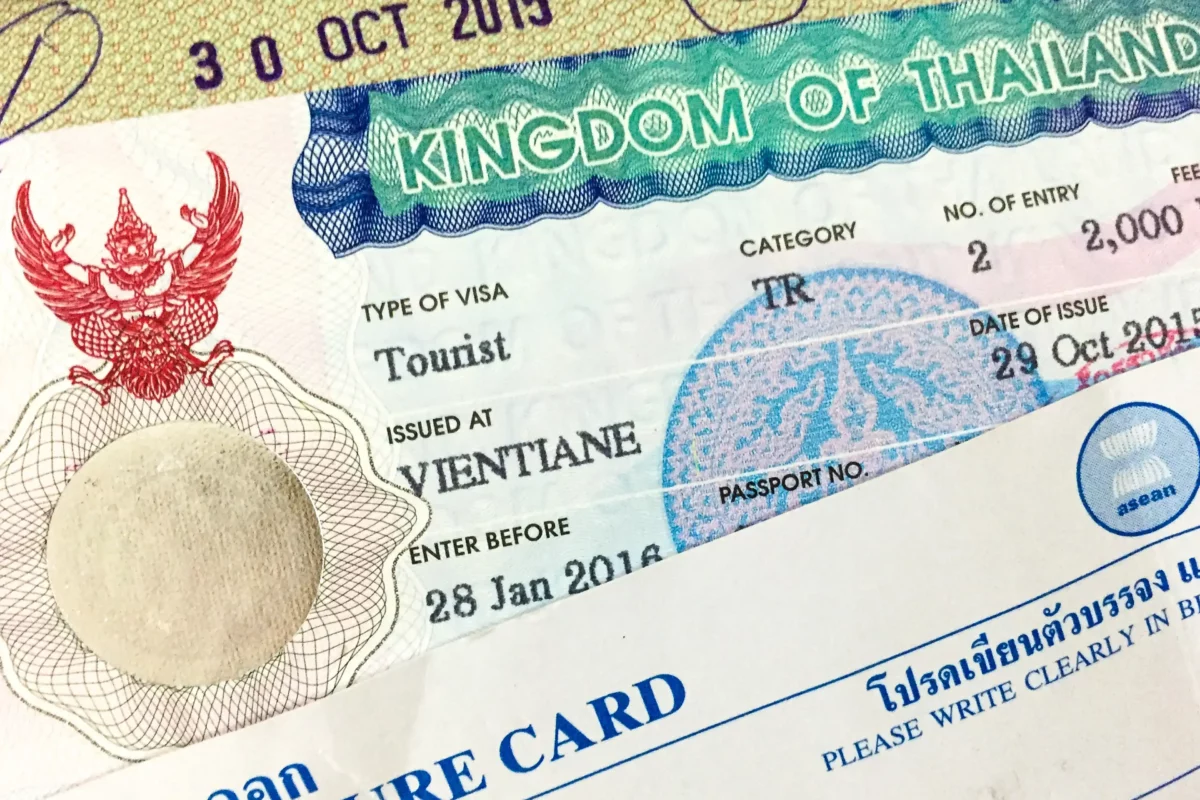
Tourist Visa in Thailand. Thailand offers several tourist visa options, each tailored to different needs and durations. Understanding the visa types, eligibility, and application processes ensures a smooth journey for visitors.

1. Types of Tourist Visas

  • Single-Entry Tourist Visa (SETV):
    Valid for 60 days, extendable by 30 days at a local immigration office. Ideal for short-term visits.
  • Multiple-Entry Tourist Visa (METV):
    Grants multiple 60-day stays within a 6-month validity period. Each stay can be extended by 30 days. Requires proof of financial stability.
  • Visa Exemption:
    Citizens from certain countries (e.g., the U.S., UK, and EU) can enter without a visa for up to 30 days by air or 15 days by land. Extensions are possible.

2. Application Requirements

  • Required Documents:
    • Valid passport (minimum six-month validity).
    • Completed visa application form.
    • Passport-sized photos (usually 4×6 cm).
    • Proof of onward travel (return ticket).
    • Financial proof: Bank statement showing a minimum balance (e.g., 20,000 THB for individuals).
  • Application Process:
    • Apply at a Thai embassy or consulate in your home country.
    • Processing times vary but typically take 3-5 business days.

3. Extending Your Stay

  • Tourist Visa Extension:
    Apply at any immigration office. The standard extension is 30 days and costs approximately 1,900 THB. Ensure you apply before your current visa expires.
  • Visa Run:
    Some travelers leave Thailand to re-enter and reset their stay duration. While common, frequent visa runs are discouraged and may raise concerns at border checkpoints.

4. Overstay Rules and Penalties

  • Fines and Consequences:
    Overstaying costs 500 THB per day, up to a maximum of 20,000 THB. Extended overstays can lead to deportation and bans on future entries.
  • Grace Period:
    There is no formal grace period, so it’s essential to leave or extend your visa before it expires.

5. Special Considerations for Long-Term Tourists

  • COVID-19 Updates:
    Check for any special entry requirements or quarantine regulations that may apply to your nationality.
  • Alternative Visas:
    For extended stays, consider alternatives like the Education Visa or Retirement Visa, each with specific requirements.

6. Tips for a Smooth Application

  • Ensure all documents are complete and up-to-date.
  • Dress appropriately when visiting embassies or immigration offices.
  • Maintain copies of all important documents during your stay.

Understanding these aspects will help you navigate the tourist visa process in Thailand smoothly and enjoy your visit without legal complications.

Mergers & Acquisitions in Thailand

The mergers & acquisitions in Thailand offers a strategic platform for both local and foreign investors to gain market access, diversify, and expand their business operations. However, it’s governed by a comprehensive legal framework that foreign investors must navigate carefully, especially within regulated industries. M&A activity is influenced by Thailand’s regulatory framework, foreign ownership laws, tax structures, and industry-specific approvals, creating a unique environment for deal structuring and completion.

1. Regulatory Framework Governing M&A

M&A in Thailand is regulated by several key laws and regulatory bodies:

  • Foreign Business Act (FBA): Limits foreign ownership in certain restricted sectors, requiring foreign investors to seek a Foreign Business License (FBL) if they wish to acquire majority ownership.
  • Securities and Exchange Act: Regulates publicly listed companies, including share acquisitions, mandatory tender offers, and disclosures for public companies.
  • Trade Competition Act: Overseen by the Trade Competition Commission (TCC), this act enforces competition law to prevent monopolistic practices in M&A transactions.
  • Corporate Income Tax Law: Governs capital gains and withholding taxes applicable to M&A deals, with favorable incentives for sectors supported by the Thai government, especially those aligned with the Thailand 4.0 initiative.

2. Types of M&A Transactions in Thailand

a) Share Acquisition

A share acquisition involves purchasing shares of the target company, either privately or on the stock exchange if it’s a public company. Share acquisitions are common when foreign buyers seek control without transferring assets, allowing them to assume ownership over existing contracts and obligations. For publicly listed companies, this approach requires compliance with the Securities and Exchange Act and may trigger a tender offer if the acquisition surpasses a certain ownership threshold.

b) Asset Acquisition

Asset acquisition involves purchasing specific assets, such as intellectual property, equipment, or real estate, rather than taking over the entire company. This method allows buyers to avoid inheriting liabilities associated with the company but may require individual transfer approvals, especially for regulated assets like real estate or trademarks.

c) Merger

Mergers are complex transactions where two companies legally combine into a single entity. In Thailand, mergers require shareholder approval and regulatory compliance, particularly if one of the companies is foreign-owned. Mergers are less common than acquisitions due to the regulatory requirements but are used in strategic scenarios where operational integration is essential.

3. Process of M&A in Thailand

The M&A process in Thailand generally includes the following steps:

a) Initial Planning and Structuring

Before initiating an M&A transaction, both parties conduct strategic planning to determine the deal’s structure, valuation, and compliance with Thai regulations. Foreign investors assess FBA restrictions and determine whether they need a Foreign Business License (FBL) or if a joint venture structure is more suitable.

b) Due Diligence

Due diligence is a critical step that includes reviewing the financial health, legal status, and operational efficiency of the target company. For foreign investors, it’s crucial to verify compliance with Thai laws, including licensing, labor regulations, and industry-specific standards. This process may also reveal any hidden liabilities or risks, influencing the deal’s structure or price.

c) Negotiation and Agreement Drafting

Upon completing due diligence, both parties negotiate terms and draft legal agreements, such as a Share Purchase Agreement (SPA) or Asset Purchase Agreement (APA). The agreement specifies terms like purchase price, conditions precedent, warranties, and representations.

d) Regulatory Approvals

M&A transactions may require approvals from relevant Thai authorities:

  • Foreign Business License (FBL): Required for foreign entities acquiring majority shares in restricted industries.
  • Trade Competition Commission (TCC): Approval may be required if the acquisition creates market dominance or risks anti-competitive practices.
  • Board of Investment (BOI): Companies in certain promoted sectors may need BOI approval to benefit from tax incentives and foreign ownership allowances.

e) Closing and Post-Transaction Integration

Once all regulatory approvals are obtained, the transaction can proceed to closing. Post-closing integration includes merging operations, aligning company cultures, and ensuring compliance with Thai employment laws.

4. Tax Considerations in Thai M&A


a) Corporate Income Tax (CIT)

Thailand’s corporate income tax rate is generally 20% but may vary if the acquiring company is BOI-promoted or eligible for tax holidays in targeted sectors.

b) Withholding Tax

Withholding tax applies to capital gains on shares transferred by non-residents. A 15% withholding tax is levied on capital gains for foreigners unless tax treaties provide exemptions or lower rates.

c) Value-Added Tax (VAT)

In asset acquisitions, VAT at a rate of 7% is often applied to transferred assets, unless the transfer qualifies as a business transfer under Thai tax law, in which case VAT may be waived.

5. Post-Merger Integration Challenges

M&A integration is essential for realizing synergies and aligning business operations, though challenges often arise:

  • Cultural Integration: Thai corporate culture values respect and hierarchy, which may differ significantly from foreign work practices. Companies often face challenges in integrating management styles and work environments.
  • Regulatory Compliance: M&A integration must comply with local labor laws, which require fair treatment for all employees, particularly during restructuring or layoffs.
  • Retention of BOI and Other Incentives: BOI-promoted companies must maintain compliance with investment conditions to retain tax and ownership benefits. Failure to do so may result in penalties or withdrawal of BOI privileges.

6. Recent M&A Trends in Thailand


a) Rise in Cross-Border Transactions

Cross-border M&A activity has increased, particularly in technology, renewable energy, and consumer goods, as Thailand pursues its Thailand 4.0 initiative, focusing on innovation and sustainability.

b) Private Equity and Venture Capital Interest

Private equity and venture capital firms have shown strong interest in Thai companies, especially startups in fintech, e-commerce, and health tech, reflecting a favorable environment for venture investments in high-growth sectors.

c) Growth in Real Estate and Hospitality Sectors

M&A in Thailand’s real estate and hospitality sectors remains robust, driven by strong tourism growth and infrastructure development, especially in tourist hubs like Bangkok, Phuket, and Pattaya. Foreign investors are keen on acquiring hotels, resorts, and mixed-use developments.

Conclusion

Mergers and acquisitions in Thailand offer extensive opportunities for investors, but they require a deep understanding of the regulatory environment, industry-specific requirements, and tax implications. By conducting thorough due diligence, navigating compliance procedures, and aligning with local market conditions, investors can leverage Thailand’s dynamic market for successful M&A deals. With an emphasis on strategic sectors and growing cross-border interest, the M&A landscape in Thailand is poised for growth, providing attractive opportunities for both domestic and foreign participants.

Thailand SMART Visa

The Thailand Smart Visa is designed to attract highly skilled professionals, investors, executives, and entrepreneurs to work in targeted industries, known as S-Curve industries, which are key to the country’s economic growth. Introduced in 2018, the visa offers unique benefits such as long-term residency, exemption from work permits, and flexible employment options. This visa is particularly beneficial for foreign talent in fields such as technology, biotech, renewable energy, and healthcare.

1. Purpose and Goals of the Smart Visa

The Smart Visa was introduced to align with Thailand’s Thailand 4.0 initiative, an economic model focused on transforming the country into an innovation-driven economy. The visa targets S-Curve industries, which include both First S-Curve industries (existing industries that Thailand aims to enhance) and New S-Curve industries (emerging sectors).

a) First S-Curve Industries

These industries are already well-established in Thailand and are being modernized through innovation and technology. They include:

  • Next-Generation Automotive.
  • Smart Electronics.
  • Affluent, Medical, and Wellness Tourism.
  • Agriculture and Biotechnology.
  • Food for the Future.

b) New S-Curve Industries

These emerging sectors are expected to drive future economic growth. They include:

  • Automation and Robotics.
  • Aviation and Logistics.
  • Biofuels and Biochemicals.
  • Digital Technology.
  • Medical Hub.

The visa is designed to bring expertise and investment into these areas, helping Thailand to modernize its economy and reduce reliance on low-wage manufacturing.

2. Types of Thailand Smart Visa

There are five main categories of the Smart Visa, each targeting a different group of professionals or investors:

a) Smart T (Talent)

The Smart T Visa is aimed at highly skilled professionals with expertise in science, technology, or engineering. Applicants must have a minimum monthly salary of THB 100,000 and be employed in one of the targeted industries.

  • Eligibility: The candidate must possess expertise in the designated industries and be employed by a Thai-based company, research institution, or government agency.
  • Benefits: The visa offers a residency of up to 4 years, exemption from work permit requirements, and the ability to change jobs without needing a new visa.

b) Smart I (Investor)

The Smart I Visa targets investors who invest in companies in Thailand’s targeted industries. This visa is designed to encourage foreign direct investment and growth in innovative sectors.

  • Eligibility: An applicant must invest at least THB 20 million in a qualified business or company that aligns with Thailand’s Smart Visa industry sectors.
  • Benefits: The visa allows up to 4 years of residency and includes benefits for the investor’s family members.

c) Smart E (Executive)

The Smart E Visa is for senior executives who play key leadership roles in companies operating in the targeted sectors.

  • Eligibility: Applicants must hold a senior management position, earn at least THB 200,000 per month, and have at least 10 years of work experience in their field.
  • Benefits: Executives are granted up to 4 years of residency and are exempt from the need for a work permit.

d) Smart S (Startup)

The Smart S Visa is aimed at entrepreneurs looking to establish startups in Thailand’s target industries. This visa is intended to attract innovation-driven entrepreneurs and foster a startup culture in Thailand.

  • Eligibility: Applicants must have a detailed business plan for a startup related to Thailand’s S-Curve industries and maintain a minimum deposit of THB 600,000 (reduced for family members).
  • Benefits: Initial visa issuance is 1 year, with the option to extend for up to 4 years based on the performance and establishment of the business.

e) Smart O (Other)

The Smart O Visa is designed for family members of Smart Visa holders. It covers spouses and children and grants them the same visa duration and residency rights as the primary visa holder.

  • Eligibility: The applicant must be a legal spouse or dependent of a Smart Visa holder.
  • Benefits: The visa allows long-term residency and, in some cases, the ability to work without a work permit.

3. Key Benefits of the Smart Visa

The Thailand Smart Visa offers numerous benefits over traditional visa types, making it a highly attractive option for foreign professionals, investors, and entrepreneurs.

a) Exemption from Work Permit

One of the most attractive features of the Smart Visa is that it allows holders to work in Thailand without the need for a separate work permit. This simplifies the bureaucratic process and reduces the time required to start working.

b) Extended Visa Duration

Unlike standard visas that require annual renewals, the Smart Visa is valid for up to 4 years. This is particularly beneficial for professionals and investors who plan to establish long-term careers or businesses in Thailand.

c) Family Inclusion

Spouses and children of Smart Visa holders can live in Thailand under the Smart O Visa. In some cases, spouses are allowed to work in Thailand without needing a work permit.

d) 90-Day Reporting Exemption

Smart Visa holders are exempt from the standard 90-day reporting requirement that applies to most long-term visas in Thailand. Instead, visa holders are required to report only once a year.

e) Flexibility to Change Jobs

Another key advantage is the freedom to change employers or positions without needing to apply for a new visa, as long as the job remains within one of the targeted industries.

4. Eligibility Requirements and Application Process

The application process for the Smart Visa involves several steps, including obtaining endorsement from the relevant government agencies that confirm the applicant’s expertise or investment in targeted industries.

a) Initial Application

The first step is submitting an application to the One-Stop Service Center for Visas and Work Permits (OSS). The application must include:

  • Detailed proof of qualifications or expertise.
  • Employment contract or investment proof.
  • Business plan (for Smart S).

b) Endorsement from Relevant Authorities

Applications are reviewed by relevant government agencies, such as the Board of Investment (BOI) or the Ministry of Digital Economy and Society, depending on the applicant’s industry. These agencies confirm that the applicant’s work or investment aligns with Thailand’s Smart Visa goals.

c) Visa Issuance

Once the applicant receives endorsement, they can apply for the Smart Visa at their nearest Thai embassy or immigration office. Successful applicants receive the visa and can start working or investing in Thailand immediately.

5. Challenges and Considerations

a) Industry-Specific Requirements

Smart Visa eligibility is highly dependent on the applicant’s ability to demonstrate expertise in one of Thailand’s targeted industries. Individuals or businesses outside these sectors may face difficulties obtaining approval.

b) High Financial and Experience Thresholds

For some Smart Visa types, particularly Smart I and Smart E, the financial and experience thresholds can be quite high. Applicants must carefully evaluate whether they meet the income, investment, or professional experience requirements.

c) Annual Reporting for Progress

While the visa allows extended residency, Smart S (Startup) holders, in particular, must show progress in their business development to qualify for visa extensions. This can be challenging for new businesses that face initial hurdles in setting up.

Conclusion

The Thailand Smart Visa is a powerful tool for attracting foreign talent, investment, and expertise into key growth sectors, supporting the country’s Thailand 4.0 vision. With its wide range of benefits, including long-term residency, work permit exemptions, and family inclusion, the visa provides a compelling option for professionals, investors, executives, and entrepreneurs who wish to live and work in Thailand. However, applicants must navigate the industry-specific requirements and ensure they meet the financial and professional thresholds to fully benefit from the program.

Permanent Residence in Thailand

Permanent Residence in Thailand. Thailand is a popular destination for expatriates and long-term residents, thanks to its rich culture, tropical climate, and relatively low cost of living. For those looking to settle in the country more permanently, obtaining Permanent Residence (PR) status is an attractive option. This article provides an in-depth exploration of the Permanent Residence process in Thailand, including eligibility criteria, the application process, benefits, and important considerations.

Understanding Permanent Residence in Thailand

Permanent Residence in Thailand allows a foreign national to live in the country indefinitely without the need to apply for a visa extension every year. While it does not grant Thai citizenship, it offers many benefits that make living in Thailand more convenient and secure for long-term residents. PR status is particularly appealing to expatriates, investors, retirees, and those with Thai family connections.

Eligibility Criteria for Permanent Residence

Thailand’s Permanent Residence program is selective, and applicants must meet specific criteria to be considered. The key eligibility requirements include:

1. Holding a Long-Term Visa

To be eligible for Permanent Residence, an applicant must have held a non-immigrant visa for at least three consecutive years before applying. The visa must be one of the following types:

  • Non-Immigrant “B” Visa (Business Visa)
  • Non-Immigrant “O” Visa (Marriage/Retirement Visa)
  • Non-Immigrant “ED” Visa (Education Visa)
  • Non-Immigrant “O-A” Visa (Long Stay Retirement Visa)

Applicants must maintain continuous visa status during the three-year period, meaning they cannot have overstayed or left the country without a valid re-entry permit.

2. Employment and Financial Stability

For those applying based on employment, the applicant must show proof of employment with a company registered in Thailand for at least three consecutive years. Additionally, the applicant must have a work permit for the same period. Financial stability is demonstrated through proof of a minimum income of THB 80,000 per month or THB 100,000 per month if married to a Thai national.

3. Investment

Applicants can also qualify for Permanent Residence through investment. This usually requires an investment of at least THB 3 million in Thai government bonds, real estate, or company shares.

4. Family Relationships

Foreign nationals who are married to a Thai citizen or who have Thai children can apply for Permanent Residence under the family category. The marriage must be legally registered, and the relationship must be genuine and ongoing.

5. Academic Qualifications

Highly qualified professionals and experts in specific fields may also be eligible for Permanent Residence. The applicant must hold a position that contributes significantly to Thailand’s economy, education, or technology sectors.

6. Humanitarian Reasons

In rare cases, Permanent Residence may be granted for humanitarian reasons, such as providing care for a Thai citizen who is elderly or disabled.

The Application Process

The process of obtaining Permanent Residence in Thailand is rigorous and involves multiple steps, including submitting detailed documentation, undergoing interviews, and passing background checks. The application process is as follows:

1. Annual Quota

Thailand limits the number of Permanent Residence permits issued each year to 100 per nationality. Therefore, it’s important to apply as early as possible to increase your chances of being accepted within the annual quota.

2. Submission of Application

Applications for Permanent Residence are typically accepted once a year, usually between October and December. Applicants must submit their application at the Immigration Bureau in Bangkok. Required documents include:

  • A completed application form.
  • A valid passport with copies of all pages.
  • A certificate of residence from the local Thai police station.
  • Work permit copies (if applicable).
  • Proof of income and tax payment records for at least three years.
  • Marriage certificate or birth certificate if applying based on family relationships.
  • Medical certificate issued by a licensed hospital in Thailand.
  • Photographs and fingerprints.

3. Interview and Language Test

After the application is submitted, applicants must undergo an interview with Thai immigration officials. The interview assesses the applicant’s knowledge of Thai language, culture, and society. A basic Thai language test is part of the interview process, where applicants must demonstrate an ability to communicate in Thai.

4. Background Check

A thorough background check is conducted to ensure that the applicant does not have any criminal record or history of behavior that may pose a risk to Thailand’s national security.

5. Approval Process

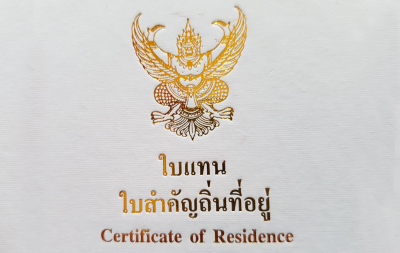
The approval process for Permanent Residence can take up to one year or more. The application is reviewed by the Ministry of Interior, which forwards the final decision to the Immigration Bureau. If approved, the applicant will receive a Certificate of Residence, which serves as proof of their PR status.

Benefits of Permanent Residence in Thailand

Obtaining Permanent Residence in Thailand offers several significant benefits:

1. Indefinite Stay

Permanent residents can live in Thailand indefinitely without needing to renew their visa annually. This eliminates the need for 90-day reporting or applying for re-entry permits.

2. Work Opportunities

PR holders are permitted to work in Thailand without needing to apply for a work permit. This offers greater flexibility in employment and business opportunities.

3. Property Ownership

While foreigners are generally restricted from owning land in Thailand, Permanent Residents are allowed to purchase a condominium in their name without having to bring in funds from abroad, unlike foreign buyers who do not have PR status.

4. Ease of Travel

Permanent residents can leave and re-enter Thailand without needing a re-entry permit. This provides greater freedom for those who travel frequently.

5. Pathway to Citizenship

Permanent Residence is a key step toward obtaining Thai citizenship. After holding PR status for at least five years, an individual can apply for Thai citizenship, subject to additional requirements.

6. Family Benefits

Permanent residents can include their dependents (spouse and children under 20 years old) in their PR application, allowing the entire family to reside in Thailand under the same status.

Important Considerations

While Permanent Residence in Thailand offers numerous benefits, there are also important considerations to keep in mind:

1. Quotas and Competition

With a limited annual quota per nationality, competition for Permanent Residence is high. It’s crucial to submit a well-prepared application and meet all eligibility criteria to improve your chances of approval.

2. Language Proficiency

Basic proficiency in Thai is essential for the application process. Those who do not speak Thai may face challenges during the interview and language test, which are crucial parts of the approval process.

3. Financial Requirements

Maintaining the required financial stability is important not only for the initial application but also for demonstrating continued eligibility during the approval process. Applicants should ensure they meet the income or investment criteria before applying.

4. Annual Reporting

Permanent residents are still required to report their address annually to the local immigration office. Failure to do so may result in penalties or complications with your PR status.

5. Long Approval Process

The approval process for Permanent Residence can be lengthy, often taking more than a year. Applicants should be prepared for this and ensure their current visa status remains valid throughout the application period.

Conclusion

Obtaining Permanent Residence in Thailand is a significant achievement that offers long-term security and numerous benefits for expatriates, retirees, and foreign investors. While the application process is rigorous and requires careful preparation, the rewards of PR status—such as the ability to live, work, and own property in Thailand indefinitely—make it a highly desirable goal for many long-term residents.

For those considering Permanent Residence, it’s essential to fully understand the eligibility requirements, prepare a thorough application, and be patient throughout the approval process. With the right approach, Permanent Residence in Thailand can provide a stable and rewarding foundation for a life in one of Southeast Asia’s most dynamic countries.